STARTING JANUARY 5, 2027 – Enroll now!
We are expanding our career training opportunities with TWO new programs beginning January 5, 2027: Heavy Equipment Service Technician and Veterinary Assistant.
Whether you are interested in maintaining and repairing powerful machinery or helping care for animals in a clinical setting, these hands-on programs will provide the skills and training needed to pursue rewarding careers in growing industries. Be among the first to take the next steps. WE ARE OFFERING FREE TUITION for the JANUARY ENROLLMENT! So be sure to fill out the form below so you can take advantage of this terrific opportunity.
Program details below.
NEW PROGRAMS REQUEST INFO 2026-2027
Enrollment/waitlist/request info form
Heavy Equipment Service Technician
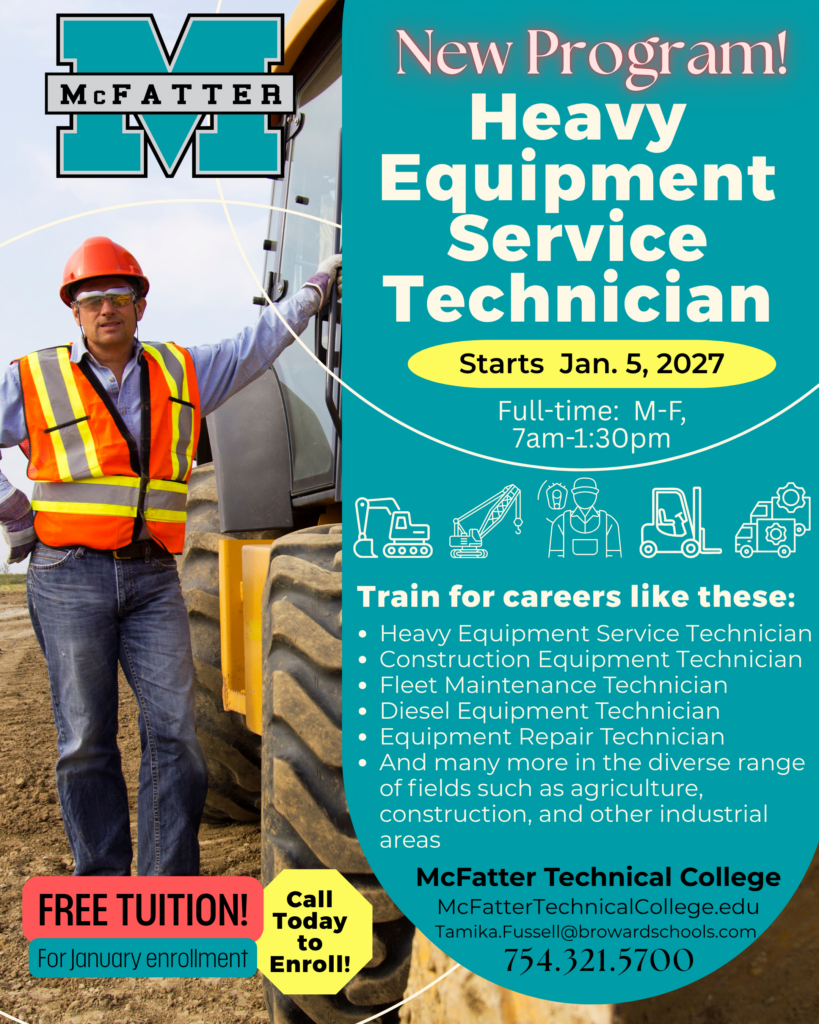
The Heavy Equipment Service Technician program prepares students for careers maintaining, diagnosing, and repairing heavy equipment used in construction, transportation, agriculture, and industrial operations. Through classroom instruction and hands-on training, students develop the technical skills needed to work as a service technician, construction equipment mechanic, diesel equipment technician, or fleet maintenance technician.
Students gain experience servicing diesel engines, hydraulic systems, powertrains, braking systems, electrical systems, and other critical equipment components. Using industry-standard diagnostic tools and repair procedures, students learn workplace safety, preventive maintenance, troubleshooting, and equipment repair techniques. Graduates are prepared for entry-level employment with equipment dealers, construction companies, fleet maintenance operations, and heavy equipment repair facilities.
The program is 1800 hours and will be offered full-time on campus Monday – Friday from 7:00am – 1:30pm.
Veterinarian Assisting
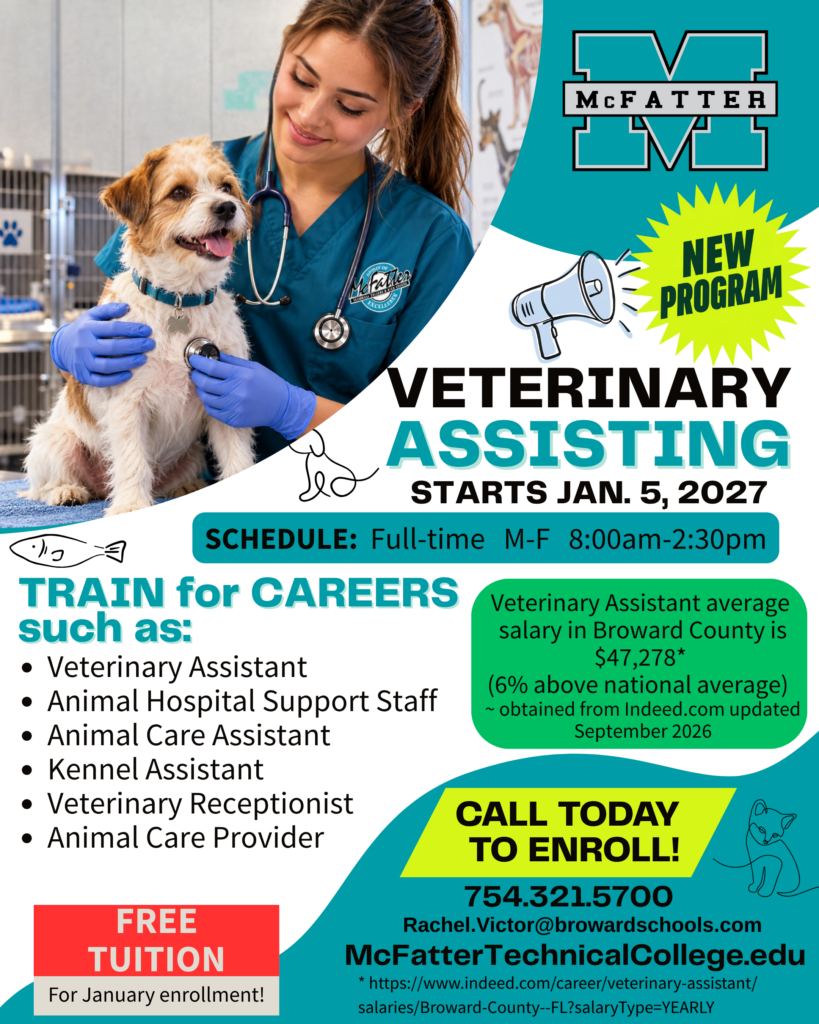
The Veterinary Assisting program provides students with the foundational knowledge and hands-on skills needed to support veterinarians and veterinary technicians in animal care settings. As a hands-on vet assistant program, students learn essential clinical, laboratory, and administrative procedures while gaining experience working with companion animals in a professional environment.
Training includes animal handling and restraint, exam room preparation, infection control, medical terminology, basic laboratory procedures, client communication, and veterinary office operations. Students gain practical experience supporting animal health and welfare while learning the responsibilities of veterinary support professionals. Graduates are prepared for entry-level roles in veterinary practices, animal hospitals, boarding facilities, and other animal care organizations.
The program is 750 hours and will be offered full-time on campus Monday – Friday from 8:00am – 2:30pm.